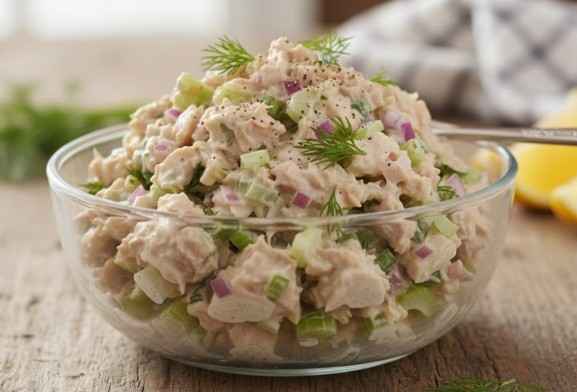
If you have a question in mind: how long is tuna salad good for? Then you are not alone; many people search for this question on a daily basis. The answer is the tuna salad is good for about 3 to 5 days in the refrigerator, especially when it is stored in an airtight container at or below 40°F (4°C). Tuna salad that is made at home with mayo and fresh veggies lasts for 3 days. Tuna that has fresh ingredients and is handled with proper hygiene can last for 5 days.
According to USDA and FDA food-safety guidance, tuna salad comes from the category of prepared fish and mixed leftovers, which can be easily eaten in 3 to 4 days for best safety and quality. Some other sources also allow it to last up to 5 days, especially when the tuna salad is stored properly; however, after the 5-day limit, it can contain harmful bacteria like listeria.
Why Tuna Salad Spoils Faster Than Canned Tuna
Tuna salad spoils much faster than plain canned tuna. There are several scientific and safety reasons for this, including
Mixing Tuna with Perishable Ingredients Shortens Shelf Life
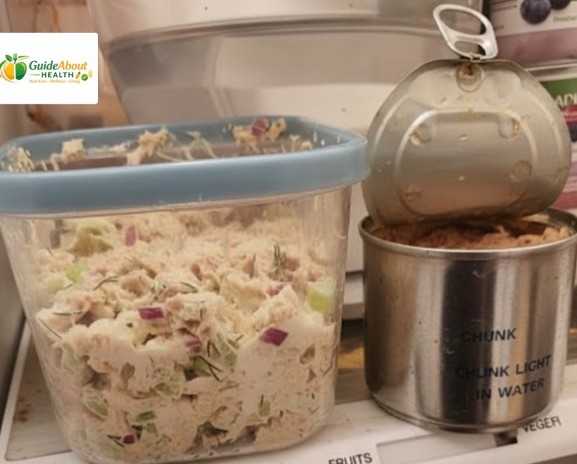
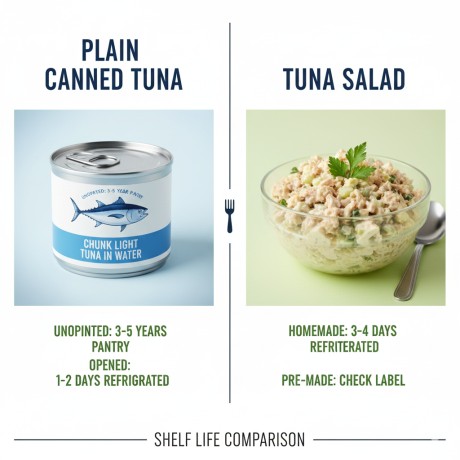
Plain canned tuna is simply just a fish without any ingredients, so the shelf life of it is longer than regular tuna because canned tuna is heat-processed and sealed, which kills all the bacteria and also reduces the risk of bacterial growth afterward. An unopened can can last for years if stored at room temperature.
The tuna salad contains not just tuna but other ingredients like mayonnaise, celery, onions, vegetables, eggs, yogurt, or sauces. All these ingredients easily add moisture, bacteria, and air to the salad, which leads to spoilage. When you mix tuna with other ingredients, it affects the shelf life, and the salad becomes a ready-to-eat refrigerated dish.
The Danger Zone makes Tuna Salad Risky
Tuna salad is very sensitive when it comes to temperature; the danger zone temperature for tuna is 40 to 140°F (4 to 60°C), and the growth of bacteria increases rapidly.
Tuna salad is based on protein and contains mayonnaise too, as both these ingredients have harmful bacteria like Listeria or Staphylococcus. These bacteria can easily grow in tuna salad if it is left out too long, not cooled fast enough, and stored in a warm fridge. This is the reason why the food safety authorities recommend eating tuna salad within 2 hours (or 1 hour in hot weather).
Bad Handling Leads to More Bacterial Exposure
Another reason why tuna salad goes bad is the human handling. Like if the making of tuna salad takes place from unhygienic habits such as mixing ingredients with unclean utensils, using unwashed knives for vegetable cutting, or repeated opening of the container. All these unhygienic steps increase the risk of bacterial growth.
Plain Canned Tuna vs. Tuna Salad: Shelf Life Comparison
How to Store Tuna Salad for Maximum Freshness
Proper storage is important when it comes to tuna salad. If you store the tuna salad properly, it can easily last for 3 to 5 days and be considered safe to eat; however, if you make small mistakes like keeping tuna salad out for long or using the wrong container, it can lead to a reduced shelf life of tuna and cause bacterial growth.
Refrigerate it within 2 Hours
According to many food authorities guidelines, it is recommended to store tuna salad in the refrigerator just 2 hours after preparation. If the fridge temperature is above 90°F (32°C), then the time to refrigerate it can change from 2 hours to 1 hour.
If you leave tuna at room temperature (around 40–140°F / 4–60°C), the harmful bacteria can double rapidly. In short, proper storing makes tuna salad stay fresh for a long time.
Use Airtight and Food-Safe Containers
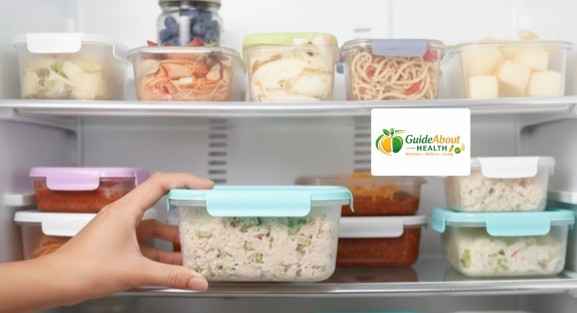
Make sure to always store tuma salad in an airtight container, as it will reduce the entrance of air and bacterial growth in the salad. You can use glass containers and BPA-free plastic containers.
Avoid loosely covered bowls, plastic wrap, or original store packaging once opened because it will allow air to enter the salad and moisture, which can make the tuna salad go bad.
Store it in the coldest part of the fridge
To keep tuna salad fresh for a long time, always place it in the coldest section of the refrigerator, like you can put tuna salad in the back of the fridge or on the lower shelf near the rear. Avoid storing salad at the fridge door or near any raw food item.
Label it with the preparation date
You can also add a label on each tuna container, like an “Eat by” date, possibly 3 to 4 days later. These labels will help you to remember when you made it in case you forget.
How Long Is Tuna Salad Good in the Fridge?
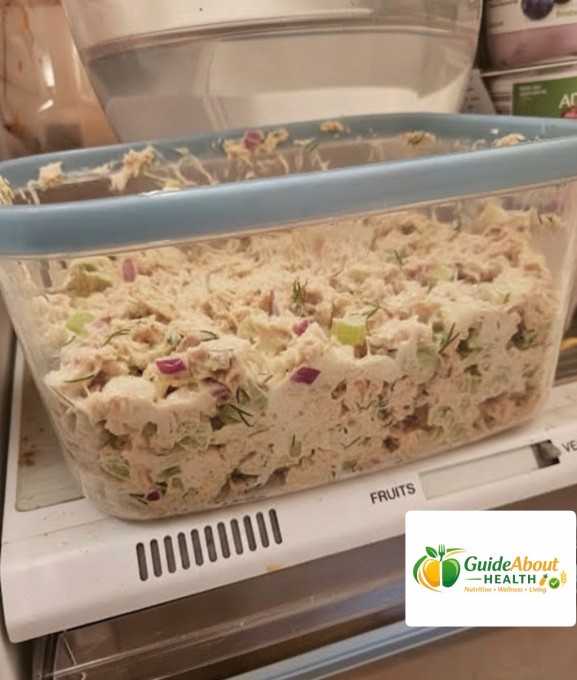
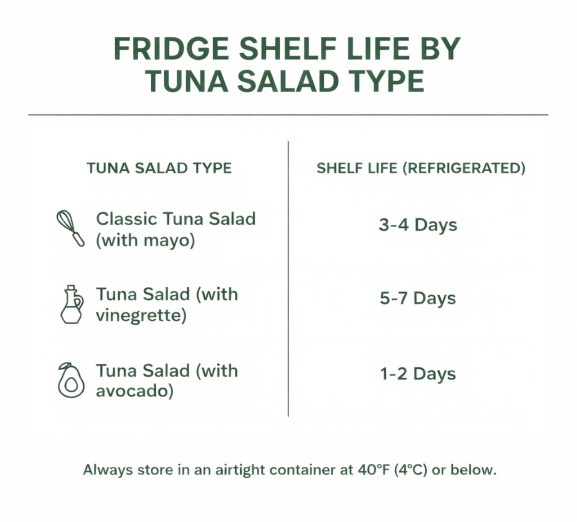
Tuna salad stays good in the refrigerator for around 3 to 5 days however, the exact time depends on the ingredients used, like how fresh they were or how properly the salad was stored.
3 days: The Safest Guideline (Best for Most Homemade Tuna Salads)
If the salad contains mayonnaise and fresh vegetables, you can easily eat it within 3 days. This timeline is safe and also best if you’re not sure about ingredient freshness or fridge temperature.
4–5 Days: Acceptable Under Ideal Conditions
Tuna salad may last up to 4 or even 5 days if the ingredients are fresh and you refrigerate it in 1 to 2 hours or keep it at 40°F (4°C) or colder consistently. After 5 days, the limit of bacterial growth can increase even if the salad looks completely fine.
Even if you want to eat tuna salad in a mentioned guideline but make sure to always check the salad before eating look for a sour smell, slimy texture, or even color changes.
Can You Freeze Tuna Salad?
Technically yes, you can freeze tuna salad however, it is not recommended by food safety authorities. The freezing of tuna salad can keep it safe to eat, but the texture, taste, and quality can reduce a lot after thawing.
Why Freezing Tuna Salad Isn’t Recommended
The ingredients in tuna salad reduce the quality when frozen; for example, mayonnaise is a mixture of oil and eggs, but when it is frozen and thawed, it can break and make tuna salad watery, grainy, and greasy.
Other ingredients like celery, onions, and pickles also release water when frozen, which makes the tuna salad soggy and limp after thawing.
The last thing that happens is the flavor change. Yes, freezing dulls flavors and can give tuna salad an “off” taste; however, it will still be safe to consume.
Better Alternatives to Freezing Tuna Salad
You can also go to better alternatives to freezing tuna salad as follow:
- Drain canned tuna well
- Place in it in an airtight freezer bag or container
- Freeze it for 2 to 3 months
- Chop vegetables and freeze them separately.
- Only add mayo and seasonings fresh after thawing.
- It is best to eat a fresh made tuna salad as this will help in time saving from freezing etc.
- if your tuna salad have olive oil in it then it can freezer better as compared to mayo based one Hoe the texture change still take place.
Signs Your Tuna Salad Has Gone Bad
Even tuna salad has a safe storage timeline, but it can still go bad early, so always check the signs before eating it.
Smell
If you notice a sour, rotten, ammonia-like odor. Any other strong or unpleasant “off” smell means the tuna salad isn’t for consumption anymore because a fresh tuna salad smells mild and savory.
Texture
If you notice a slimy coating around the tuna or other veggies, or if there is an excessive watery liquid separating from the salad, then it is a sign your tuna salad is spoiled.
Appearance
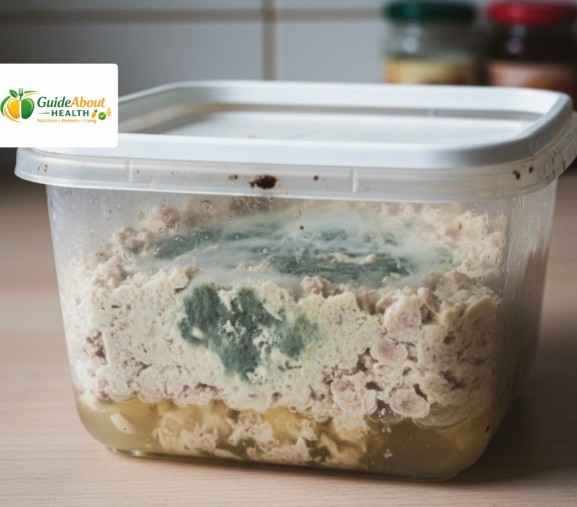
If you notice there is a change in color of the salad, like gray or green or dark patches, and any small spots like mold, then it is also a sign the tuna salad has gone bad.
It’s a warning to never taste such a salad, which already shows all the signs I discussed.
What Happens If You Eat Spoiled Tuna Salad?
If you accidentally eat a spoiled tuna salad, then it can lead to foodborne illness, which can be caused by harmful bacteria like bacterial infections (Listeria or Staphylococcus) that grow in protein-rich food items like tuna salad. The bacterial risk can be higher if the salad wasn’t stored in the fridge for hours.
Common Symptoms
After consuming a spoiled tuna salad, you may face quick symptoms in some hours or in a day. Some common symptoms are as follows:
- Nausea
- Vomiting
- Diarrhea
- Stomach cramps
- Fatigue or mild fever
Although these symptoms are normal and go away easily, if vomiting doesn’t stop, then it is important to consult a doctor, especially when children, pregnant women, or older adults eat spoiled tuna salad.
Extra Tips to Keep Tuna Salad Fresh Longer
Always use fresh and high-quality ingredients like fresh canned tuna and fresh and less watery vegetables. You can also check the expiration dates on mayo or yogurt before adding it in salad.
Proper hygiene
To avoid any kind of bacterial growth, use a clean spoon whenever you scoop the salad. Never eat it directly from the container, and also don’t reuse the spoon multiple times on salad that you already used to eat it.
Portion Servings
Always divide tuna salad by storing it in small containers instead of adding the whole tuna salad into a single large container. This will allow you to eat in portions and reduce the risk of air entrance.
Consider Alternative Dressings (Optional)
Instead of mayonnaise, use olive oil as dressing and add vinegar or lemon juice into the salad. Avoid heavy sauces, including yogurt-based sauces. These ingredients will keep the salad fresh for a long time.
Also Read: How Long Can a Sandwich Last in the Fridge? Safety & Storage Tips
My Personal Experience: I Eat a 5-Day-Old Sandwich
We’ve all done the “Fridge Math.” Open the door on Sunday and find a half-wrapped sandwich that was made on Tuesday and think maybe the sandwich is good to eat, as it was in a cold temperature for a long time, right?
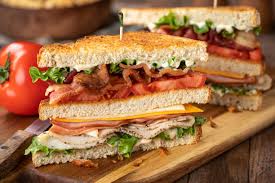
Well, I took a leftover turkey sandwich out. At first I noticed the sandwich looked completely fine; however, the bread looked a little bit soggy, and the lettuce inside lost its crispy texture, but there was no bad odor or mold growth, so I thought my sandwich passed the sniff test, so I took a small bite.
It tastes completely fine but not fresh. The turkey was a little slimy, and the tomatoes were also not in good condition but were fine when I ate them.
At first nothing happens, but after two hours I have a severe pain in my stomach, and then it turns into food poisoning. Somehow my stomach survived, but the joy for sandwiches was gone, so from next time I will never eat a sandwich that was in the fridge for more than 4 days.
Frequently Ask Questions by People
1. Is tuna salad still good after 5 days?
No, according to the food safety guidelines, tuna salad is safe to consume within 3 to 4 days after preparation. After this time limit harmful bacteria like listeria grow in it. You may find the salad looks normal even on the 5th day, but bacteria are there.
2. How long will tuna salad last in the fridge with mayonnaise?
A tuna salad that has mayonnaise in it can last for 3 to 4 days only when stored properly at a temperature of 40°F (4°C) or colder. Mayonnaise has its own shelf life; however, when it gets mixed with tuna and other ingredients, a high-moisture environment is created where bacteria grow easily.
3. How long does homemade tuna spread last in the fridge?
A homemade tuna spread can last for 3 to 4 days in the refrigerator. Spread, including mayonnaise, yogurt, cream cheese, or chopped vegetables, spoils, which is why it goes bad faster as compared to tuna. If you left the spread uncovered, it can only last for 2 to 3 days.
4. Is it safe to freeze tuna salad?
Yes, it is safe to freeze tuna salad; however, it can reduce the quality of ingredients. The main ingredient, like mayo, can get separated while freezing and thawing, which makes the salad watery.
5. Can you eat 5-day-old tuna salad?
No, it is not recommended to eat tuna salad after 5 days even if it is stored properly because fish and mayonnaise both spoil quickly. If you still consume the salad, it can lead to a risk of nausea, vomiting, stomach cramps, and diarrhea.
6. Is tuna good after 4 days in the fridge?
Yes, it can be good only if you placed it in a proper airtight container at or below 40°F (4°C); however, it is important to check the signs of spoilage before eating it.
7. How do you know if tuna salad has gone bad?
There are many signs you will notice when a salad goes bad, including a sour or rotten smell, slimy texture, separated ingredients in watery layers, discoloration, and mold.
8. How long can you keep canned tuna in the fridge after opening?
Once the can is opened, transfer the salad to a sealed glass or plastic container and refrigerate. It will be safe for 3 to 4 days.
9. What mistakes should you avoid when storing opened tuna?
- While storing an opened tuna can, leave it uncovered.
- Storing it in the original can
- Using dirty utensils
- keeping it at a warm temperature
10. How long does tuna salad last after being prepared?
A freshly made tuna salad can last up to 4 days in the refrigerator. However, if it includes ingredients like eggs, dairy, or chopped onions, it is safe to consume within 3 days.
11. Can I freeze tuna salad for a longer shelf life?
Yes, you can freeze tuna salad for a long shelf life, but it’s not a best practice because it can make the texture bad and degrade the taste. If you still want to freeze tuna salad, then don’t mix mayonnaise in it, and only add it once you thaw it.
12. What makes a tuna salad recipe safer and tastier?
A safer and better-tasting tuna salad includes:
- Properly stored tuna with fresh ingredients
- Clean utensils
- Immediate refrigeration at recommended temperature
- Acidic ingredients like lemon juice or vinegar
- No watery vegetables
13. What are the best ways to enjoy tuna salad?
The best way to enjoy tuna salad is as follows:
- Add it in sandwiches or wraps
- Spread it over whole-grain toast
- Eat it as a dip with crackers
- Stuffed it into vegetables like bell peppers
14. What reduces the shelf life of tuna salad?
The shelf life of tuna salad is shortened by putting it in a warm temperature and adding ingredients like mayonnaise and moist vegetables. Opening a stored container multiple times in a day.
15. Can you eat tuna salad after a week?
A big no, as one week will exceed all the recommended limits provided by health authorities. If you still eat it after a week, it can lead to food poisoning.
16. How can you make tuna salad last longer?
To keep it fresh for a long time, you need to store it in an airtight container at a temperature below 40°F (4°C). Add mayonnaise and vegetables before eating.
17. Do you have to eat tuna salad right away?
No, tuna salad can be stored safely if refrigerated within 1 to 2 hours after preparation. However, the sooner it’s chilled, the longer it stays fresh.
18. How long can tuna salad be left at room temperature?
You can leave tuna salad at room temperature for 2 hours and 1 hour at a temperature above 90°F (32°C).
Conclusion: Eat Safe and Avoid Waste
So, how long is tuna salad good for? In many cases tuna salad stays fresh for 3 to 5 days if made with fresh ingredients and stored properly in the refrigerator. A typical homemade tuna salad can stay fresh up to 3 days.
To stay safe while eating tuna salad, you just need to refrigerate it properly on time and store it in an airtight container by placing it in the coldest part of the fridge. Always notice the warning signs like bad smells, slimy texture, or discoloration before consuming it.
Follow all the food safety recommendations, as they not only help to stay away from side effects but also reduce waste by keeping your tuna salad fresh for as long as safely possible. If you have doubt the salad is completely gone bad, then discard it as soon as you can.
Medical Disclaimer:The information on guideabouthealth.com is for educational and informational purposes only and is not intended as medical advice. Always seek the advice of a qualified healthcare provider regarding any medical condition or dietary changes. Never disregard professional medical advice or delay seeking it because of something you have read on this website.