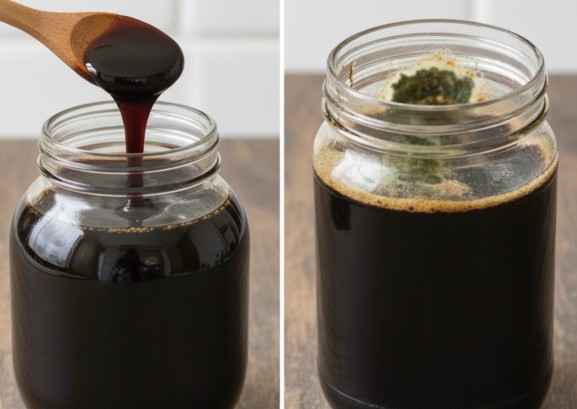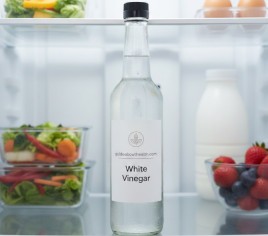
Many people get curious to know and even search about does vinegar freezes. The short answer is yes, vinegar can freeze, but it only gets frozen at a lower temperature than plain water because it contains acetic acid. Most household vinegar has 5% acidity, which means it starts freezing at 28°F (-2°C). The exact freezing point may vary based on the different types of vinegar, levels of acetic acid, and any added ingredients.
Why Vinegar freeze at low tempreture as compared to Water?
As we know, vinegar is a liquid item, and it mostly contains water, acetic acid, and a few other natural compounds mixed in. Most vinegars found in our kitchen are white or apple cider based and contain 5% acetic acid. Now you may be thinking the amount of acid is small. You will be shocked to hear this small amount can make a big difference when we talk about vinegar freezing.
Explaining Freezing‑Point Depression
The acetic acid in vinegar lowers the temperature at which water freezes. In easy words, the more acid a vinegar contains, the colder it has to be for it to completely change into ice. This is the reason why vinegar freezes after plain water. If you set aside vinegar and a water bottle, the vinegar one may freeze slower than water and also rarely forms a solid block right away.
At what tempreture Vinegar freeze?
Most household vinegars, especially white or apple cider vinegar, contain about 5% acetic acid, and they start to freeze at a temperature of 28°F (–2°C), but it is important to keep in mind that this number is just an approximation, not a fixed number. There are several factors that can affect the freezing temperature.
Acid concentration: The higher the acidity, the lower the freezing temperature.
Dilution: Adding water to vinegar can increase the freezing point closer to 32°F (0°C).
Added sugars or flavors: Some vinegars do contain sugar and other flavors, so they may freeze at slightly lower temperatures.
Impurities or trace compounds: Some vinegars have natural sediments or minerals, which can also influence how vinegar freezes.
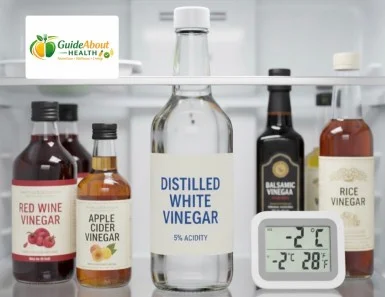
Freezing Points based on Different Vinegar type
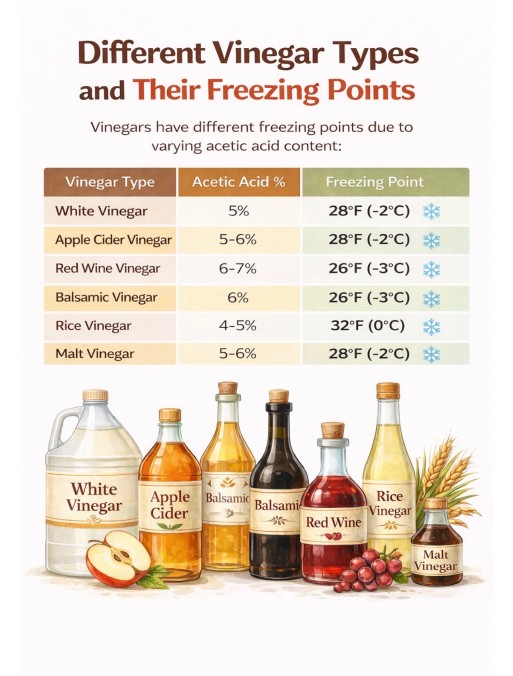
The freezing of vinegar may vary based on the different types of vinegar and their acidity. Here’s a quick guide:
White vinegar contains 5% of acetic acid and freezes at a temperature of 28°F (-2°C).
Apple cider vinegar contains less than 5% acetic acid and some natural sugars. It freezes at a temperature of 27°F (–3°C); however, the freezing is slow because of sugars and trace compounds in it.
Cleaning vinegar contains 6 to 7% acetic acid, and it freezes at a temperature of 25°F (-4°C).
Flavored or infused vinegars have different freezing points because they include fruits, herbs, or sugars that can lower the freezing temperature more.
To understand more easily, below is a complete chart for you.
What happens when Vinegar start freezing?
When it comes to freezing, vinegar behaves differently from water, as it rarely freezes into a solid block. However, you may notice the following things:
- Slushy texture: Vinegar can become partially frozen before turning into a solid.
- Ice crystals: The water in the vinegar freezes first, while the part that contains acetic acid stays in liquid foam.
- Separation: Some compounds in vinegar get separated during freezing.
- Cloudiness after thawing: This is very normal behavior, and it doesn’t mean the vinegar goes bad.
All these changes are completely harmless in nature; even thawed vinegar is safe to use and retains its flavor and acidity.
Does Freezing a Vinegar leads to unsafety and quality change?
It is a misconception that many people think that freezing will destroy vinegar and it will be unsafe to consume; however, it isn’t true because vinegar remains high in acidity even after freezing, which means vinegar continues to prevent bacterial growth. So whether you want to add vinegar in food, use it for cleaning, or other household uses, the frozen vinegar is completely safe to use.
Now you may have a question in mind: it is safe to consume, but will freezing change the taste of vinegar? Well, no, it doesn’t change taste or strength in any noticeable way. Any minor cloudiness may occur after thawing, but it is completely normal and never affects the acidity or effectiveness of vinegar.
What is mother vinegar and how it freeze?
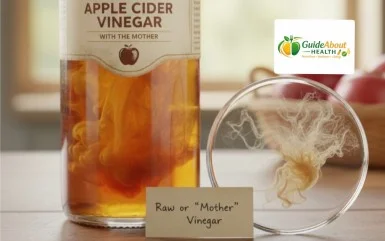
Raw or unfiltered vinegar, also known as apple cider vinegar with the “mother,” contains live cultures. When you freeze apple cider vinegar, the freezing may slow down the effects of beneficial bacteria; however, there is no scientific evidence or proof that freezing makes the vinegar harmful to use.
Any small change in the “mother” after freezing is very common and natural and doesn’t lead to any health problems. It is best to thaw-freeze vinegar gently and use it normally while understanding that some live cultures may be less active.
Does Vinegar Expand When Frozen?
Vinegar is mostly water-based, so it will expand if frozen. While this expansion is relatively small, it can still become a cause for concern in certain situations.
If the glass bottle is filled fully to the lid, then the expansion of vinegar can crack the glass, especially if you are freezing a large, completely full glass container. If you live in a cold temperature and are storing a glass vinegar bottle outside, then it can also break the glass.
To avoid such conditions, always freeze vinegar in small bottles or plastic containers. Store it at normal freezer temperatures, and don’t fill the bottles completely; leave some space at the top so vinegar can expand easily.
How to store Vinegar (Easy ways)
If you live in a cold area or plan to freeze vinegar temporarily, follow these best practices to keep it safe and maintain quality:
Leave headspace in bottles; this way there will be an extra space for vinegar to expand.
Avoid glass bottles or containers when it comes to freezing vinegar; go for plastic containers and bottles with loose caps to save the bottles from cracking.
Thaw vinegar at room temperature; this way the flavors stay safe, and it also prevents sudden pressure changes.
After thawing, shake the vinegar bottle gently; this can help in remixing any separated compounds and make vinegar again at the normal place.
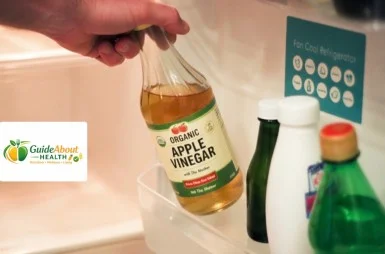
Most vinegars are shelf-stable, so freezing isn’t something important to do; however, if you face extreme cold or want to store small portions, you can freeze vinegar.

Should You Freeze Vinegar on Purpose?
In many households people avoid freezing vinegar because it is not necessary. Vinegar has a natural shelf-stable life because it is highly acidic in nature, so there is no chance it can spoil easily. In fact freezing won’t extend its shelf life.
You can keep vinegar in a cool and dry place safe from heat and sunlight. This will help in preserving flavor, strength, and quality without the need for freezing.
Also Read: How Long Can a Sandwich Last in the Fridge? Safety & Storage Tips
Frequently Ask Questions by People on Vinegar Freezing
1. Can vinegar freeze, and if so, at what temperature?
Yes, vinegar can be frozen. Vinegars that are used in many households contain 4–6% acetic acid and 94–96% water, so they can freeze easily. Vinegar can start freezing at a temperature of 28°F to 30°F (-2°C to -1°C). The standard temperature of freezing vinegar at home is 0°F / -18°C; it can be frozen partially or fully.
2. Does white vinegar lose its strength when it freezes?
No, it’s just a myth; freezing something, especially vinegar, doesn’t reduce its acidity. The acetic acid found in vinegar won’t break in freezing temperatures. After taking it out from a frozen state, it will remain the same.
3. How long does vinegar take to freeze?
Freezing vinegar depends on many factors, like temperature, container size, and air circulation. In a normal fridge, vinegar starts freezing within 2 to 6 hours; however, it has a low freezing point as compared to water, so it will take a long time to convert into a solid.
4. Can apple cider vinegar freeze?
Yes, you can freeze apple cider vinegar. Apple cider and white vinegar freeze at the same levels because they contain sediments (“the mother”); they may appear cloudy or separated after freezing. However, it won’t decrease the acidity of vinegar.
5. Will adding vinegar to water keep it from freezing?
Only minimally. Vinegar lowers water’s freezing point, but not enough to prevent freezing unless used in very high concentrations.
6. Does vinegar freeze faster than water?
No, vinegar doesn’t freeze faster as compared to water; however, it freezes slower because of the acetic acid in it. That acid interferes with ice crystal formation.
7. How to defrost frozen vinegar?
You can defrost frozen vinegar by just following these simple steps:
- The first thing you need to do is place vinegar in the refrigerator for thawing.
- Leave it at room temperature if it is sealed.
- Shake the vinegar bottle gently after thawing, as it will help the components to combine again.
- Avoid heating or microwaving, as it is unnecessary and may affect flavor.
8. What are the health benefits of vinegar?
Vinegar does have many health benefits when it comes to health. It helps in stabilizing blood sugar levels, improving digestion, and providing antimicrobial effects. It also contains small traces of antioxidants and beneficial compounds.
9. What types of vinegar do you need to avoid freezing?
Some types of vinegar can freeze easily and are considered completely safe to use; however, the quality may reduce. You can store them at room temperature.
- Balsamic vinegar gets thick and loses complexity.
- Flavored or infused vinegars
- Aged or specialty vinegars
10. Is freezing vinegar a good storage method?
No, don’t consider freezing vinegar as a good storage method because vinegar is naturally shelf-stable for years due to its acidity, so freezing won’t provide any benefit.
11. Will frozen acetic acid in vinegar release harmful fumes? Is it safe in a food fridge?
Household vinegar contains ~5% acetic acid, so it doesn’t release any harmful fumes. It is completely safe whether it is frozen or in liquid form. It is also safe to freeze in a refrigerator and can be used in food items; just make sure to freeze it in a seal-tight container. The frozen acetic acid is different from concentrated industrial acetic acid, which requires special handling.
12. Which liquid does not freeze?Well, all liquids do freeze at a certain freezing point. For example, liquids like alcohols, oils, and antifreeze have low freezing points, so they don’t freeze properly or become solid.
13. Why do most liquids, like vinegar, still freeze?
Adding substances lowers a liquid’s freezing point, but it does not remove freezing fully; however, when the temperatures drop low enough, the molecular motion slows and solidification takes place.
14. What affects the freezing speed of liquids?
Well, there are many factors that affect the freezing speed of liquids, such as freezing point, container material, temperature, air circulation, and the presence of substances like salt, sugar, and acids.15. Can vinegar go bad in the freezer?
Many people have a question in mind: can vinegar go bad in the freezer? Well, the answer is no, vinegar won’t spoil when frozen; however, the flavors might change a little, but it will be safe to use.
16. Can freezing apple cider vinegar kill bacteria or change acidity?
Freezing apple cider vinegar can inactivate bacteria; however, it is temporary, and it doesn’t kill the bacteria. Also, the acidity remains unchanged after thawing.
17. Can I freeze a vinegar mixture in an ice cube tray during winter?
Yes, you can freeze a vinegar mixture in an ice cube tray and use it for cleaning solutions or cooking. Make sure to use food-safe trays and cover them properly.
18. Will freezing alcohol or vinegar in a drink affect flavor? Yes, freezing alcohol or vinegar in a drink affects flavor.
Yes, freezing alcohol or vinegar in a drink affects flavor due to acidity or alcohol, as both carry different ingredients.
19. Can you use a sealed container to freeze vinegar with high acetic acid content?
Yes, you use a sealed container to freeze vinegar with high acetic acid content, but make sure to leave headspace to allow for expansion. Use containers that are made from glass or plastic material to avoid breaking or leakage.
Conclusion: Does Vinegar Freeze?
So does vinegar freeze? The answer is yes, vinegar can freeze, but it can only freeze at a lower temperature than water because it includes acetic acid content. The freezing of vinegar is very normal and harmless in nature; moreover, the thawed vinegar remains safe to use. Many people don’t usually freeze vinegar because it is not important and the vinegar is naturally shelf-stable. All you need to do is place it in a cool and dark place away from heat; it will last longer and maintain flavor, strength, and safety.
Medical Disclaimer: The information on guideabouthealth.com is for educational and informational purposes only and is not intended as medical advice. Always seek the advice of a qualified healthcare provider regarding any medical condition or dietary changes. Never disregard professional medical advice or delay seeking it because of something you have read on this website.